

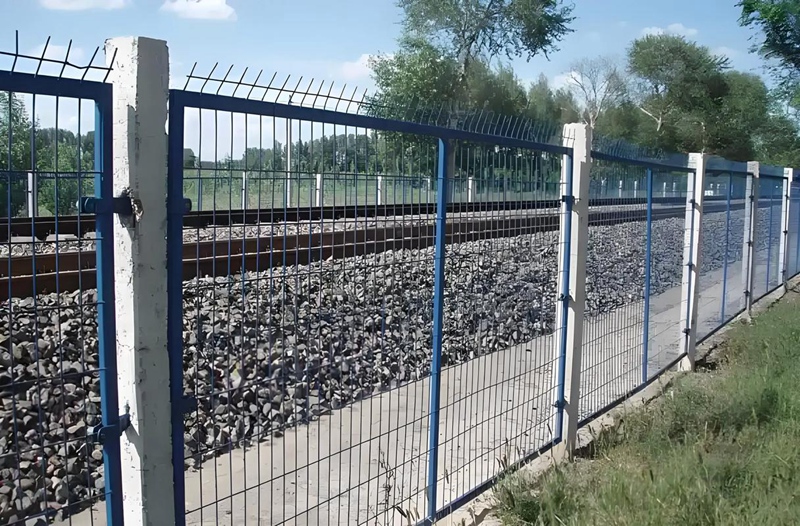
Fence netting is a kind of net structure product used for protection, isolation, and enclosure. It has a variety of materials, flexible installation, and is widely used in many scenarios. Here is a detailed introduction:
1. Product Core Introduction
1. Material Classification and Characteristics
Galvanized fence netting: Made of low-carbon steel wire with galvanization treatment, it has strong rust resistance, moderate cost, and is suitable for general outdoor scenarios.
Stainless steel fence netting: The material is 304/316 stainless steel, which is corrosion-resistant and heat-resistant, with a long service life, suitable for humid and corrosive environments.
Coated fence netting: Low-carbon steel wire is welded and then coated, with a smooth surface, rich colors, good corrosion resistance and impact resistance, and high aesthetics.
PVC fence netting: Made of PVC raw material extruded molding, lightweight, easy to install, low cost, suitable for indoor or light protection scenarios.
FRP fence netting: Made of glass fiber + resin material, insulating, corrosion-resistant, non-magnetic, suitable for special fields such as power and chemical industry.
2. Structural Types
Weaving type: including Dutch net, jacquard net, with uniform mesh and good flexibility, suitable for temporary enclosure or breeding protection.
Welding type: electric welding net, frame fence netting, with strong structure and strong load-bearing capacity, used for long-term isolation protection.
Pressing type: steel plate net fence, with high strength and anti-climbing, suitable for high-risk area protection.
Combination type: net + column + connection piece combination, can be assembled according to needs, flexible installation.
3. Core Advantages
Protection and isolation: effectively divide the area, block people or objects from crossing, and ensure safety.
Transparent view: the net structure does not block the line of sight and does not affect the beauty of the environment.
Easy installation: mostly using buckle, bolt connection, can be quickly assembled and disassembled.
Strong durability: different materials adapt to different environments, corrosion resistance, aging resistance, impact resistance.
Flexible customization: can adjust the height, mesh, color, size according to needs.
II. Key Technical Parameters
Mesh Size:
Common Square Mesh: 50×50mm, 60×60mm, 80×80mm, and can be as small as 10×10mm for breeding purposes.
Rectangular Mesh: 20×50mm, 30×100mm, suitable for scenarios requiring ventilation and anti-climbing.
Wire Diameter / Plate Thickness:
Steel Wire Diameter: 1.5mm-6mm, the thicker the wire diameter, the higher the protection strength.
Plate Thickness: 1mm-5mm, choose according to the load-bearing requirements.
Size Specifications:
Height: 0.5m-4m (common sizes are 1.2m, 1.5m, 2m, 3m).
Width: 2m-3m (standard width for single piece, convenient for transportation and installation).
Column Specifications: round (φ48mm, φ60mm) or square (40×40mm, 50×50mm), wall thickness 1.5mm-3mm.
Surface Treatment Parameters:
Galvanized Layer Thickness: ≥60μm (hot-dip galvanizing), ≥15μm (electroplated galvanizing).
Coating Layer Thickness: 0.8mm-1.2mm, colors include green, blue, white, black, etc.
Mechanical Properties:
Tensile Strength: ≥300MPa (steel wire), not easy to break.
Impact Resistance: can withstand the impact of 50kg-100kg objects without damage (adjust according to the use).
Column Compressive Strength: ≥25MPa, no tilting or bending after installation.
Operating Environment:
Temperature Range: -40℃~80℃ (conventional material), stainless steel can adapt to higher temperatures.
Applicable Environment: ordinary outdoors, seaside (need 316 stainless steel), chemical area (need anti-corrosion material).
III. Typical Use Scenarios
Municipal engineering: road isolation barriers, sidewalk enclosures, park and scenic area protection, and green belt isolation.
Industrial field: factory workshop isolation, warehouse zoning, equipment protection barriers, and factory area walls.
Construction: temporary enclosure of construction sites, edge protection of floors, elevator shaft protection, and pit enclosures.
Agriculture breeding: chicken, duck, goose, rabbit and other poultry breeding enclosures, orchard and vegetable garden anti-theft enclosures.
Traffic facilities: highway isolation fences, railway protection nets, parking lot enclosures, and community parking space division.
Other scenarios: school playground handrails, sports field enclosures, airport isolation areas, and prison protection nets.